Thursday, 9 March 2017

International Women's Day - Wednesday March 8, 2017

In honor of International Women's Day a bronze statue was set in front of the 'Wall Street Bull' this week to symbolize and celebrate the power of women across our planet. Yesterday students in Room 17/18 were shown this photograph featuring the bull and its new addition and asked to independently write a response.   Picture prompts are a powerful way for students to generate ideas, reflect and fuel their curiosity. Many insightful and thoughtful conversations arose!  Here is a sample of some of the students' responses:                                                                                                                              

“It looks like the women inspires others by showing bravery”

“The girl is brave and a hero to face the bull”

“She’s facing her own fears and she’s sending a message that you shouldn’t be afraid of things.”

“I think the girl is standing up for herself”

“The bull is a bully.  I think that the bully was scaring someone so that girl had the courage to stand up to the bully”

“That girl isn’t scared of that bull.  The bull is her fears or problems and what I see is a girl not scared of boundaries or limits to what she is or what the world labels her to be. She is overcoming stereotypes, sexism or racism and showing the world she is not just a girl”

“I think the bull is trying to show off with it’s great size, power and speed to that girl…The girl says stop bullying and stands up for herself.

“This picture looks like a girl who isn’t afraid of anything who can be appreciated and loved for who she is”

We also watched several videos highlighting women's issues in the world today and discovered that many very important inventions were drawn from powerful women throughout history.

Students watched a short biography of Amelia Earhart's life.  Please feel feel to watch these again with your children and ask them to share their incredible and insightful thoughts!

https://www.youtube.com/shared?ci=cr-xzDv6Ijo


Sunday, 15 January 2017

Ancient Athens, Democracy or Not?

We have been studying Ancient Athens, said to be the first democratic societies.  We learned about how your class, status and birthplace affected your status in society.  Only citizens were allowed to take part in voting and other decision making.  To be a citizen you had to be a freeborn Athenian male over a certain age and both your parents also had to be born in Athens as well.  Not only did this exclude all of the women but also anyone (Metics) who was born elsewhere or whose parents were born elsewhere.  Slaves were also a part of Athenian society and were either owned by the City State or by private citizens.

Women were not only not allowed to take part in decision making, but they were also not allowed to leave their homes without a male relative.  Girls didn't go to school and had less opportunities than boys.

Athens used Direct Democracy in their decision making.   This meant that everyone had a say about what would happen.  But as we already learned not everyone who lived in Athens was allowed to vote.  Only about 1 in 10 Athenians were able to take part in decision making.  So was Athens really a democratic society?


Monday, 21 November 2016

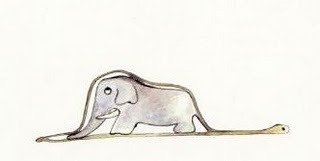
What do you see?

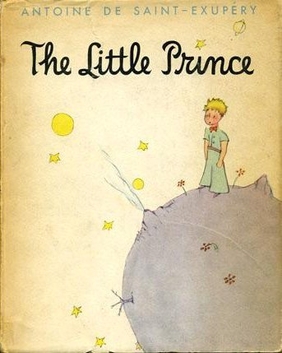
As part of our Sky Science inquiry students in Rooms 17 and 18 have been reading The Little Prince by Antoine De Saint-Exupery.    As a child, the main character in the story draws an image of a Boa Constructor who swallowed an elephant but is frustrated by adults' inability to see what he has actually drawn.

"Whenever I encountered a grown-up who seemed to me at all enlightened, I would experiment on him with my drawing Number One...I wanted to see if he really understood anything.  But he would always answer, 'its a hat'.    We decided to challenge the author's findings by surveying students from Kindergarten to Grade 6 as well as adults.  The findings were very diverse!   Students decided that whether or not someone saw what was right in front of them or not depended in fact less on their age and more on their imagination, creativity and ability to think outside the box.

What do you YOU see?


Sunday, 30 October 2016

Zones of Regulation

The Zones of  Regulation give students a way to vocalize how they are feeling and understand the triggers that create these emotions.  As part of our exploration of the Zones students brainstormed different words for each zone. Being in the Yellow Zone brought up words such as 'hyper', 'annoying', 'giddy', 'unfocused' and the Blue Zone was defined as being 'lonely' or 'sad'.

We then created our own Emoji's to allow students to bring to life their personal interpretation of each zone and accompanied this with a metaphorical poem.  

Monday, 17 October 2016

What do we need to survive?

He defeated Mantracker,  jumps out of airplanes and can build a fire in any weather condition! Students in Grade 5/6 at CJFS had the privilege of meeting Vlad Rybicka on Friday as he shared with us his love for the outdoors and survival expertise.

Vlad stressed the importance of being prepared, educating yourself and ensuring that you have the proper equipment.  He shared with us the incredible sense of freedom that being outdoors gives him and inspired us to explore this incredible country that we call home!  When we asked Vlad,  "What is success to you?" he stated that to him success is when, "I challenge myself so I can grow stronger, always finishing what I start.  Nobody can stop you!"

Students in Room 17/18 have been looking at the concept of survival as we have investigated the devastation that swept through Haiti recently account Hurricane Matthew.  We have brainstormed the issues faced by the people of Haiti as they struggle to rebuild their country and navigate the countless problems that a hurricane of this magnitude can bring.  Stay tuned for more of our work on Haiti!

Sunday, 16 October 2016

Micrography


Last year, while on a field trip to Heritage Park we noticed some portraits of famous Canadians that were made up of words. We were inspired by these and decided to recreate them ourselves. Our first step was to talk about adjectives and brainstorm adjectives that described ourselves. The next step was to use a photograph and trace the outlines of our faces on a blank piece of paper. Next we filled in the spaces with the words that we had brainstormed. Once we were finished working in pencil we went over it with a fine tip sharpie. Finally the last step was to erase the pencil marks. Can you guess who each portrait is?


Monday, 26 September 2016

Democracy

In Social Studies we have begun to look at our rights and responsibilities as citizens of this school and of our city and country.  We learned that equity and equality are not the same thing.  Equality is treating everyone the same and Equity is giving people what they need to be successful.  We have also learned that democracy is built on four beliefs (or pillars): Equity, Justice, Freedom and Representation. 


We will be revisiting these concepts throughout the year in our studies.